What happens when you activate a PLB?
And when is the right time to activate it?
Great Walks looks at what happens when a personal locator beacon is activated – and what you should do while waiting for help to arrive.
An accident has happened in a remote area and you decide you need help. Your first priority is to stabilise yourself and reduce the risk of further injury. Then ask yourself: do you really need rescuing?
Don’t activate a PLB for something that isn’t life-threatening or doesn’t require medical treatment. If your problem is likely to delay you by a day or two, you may not need to be rescued. However, if you’re in doubt, police would prefer you to call for help sooner rather than later. It is much better to evacuate someone before they become critically ill or injured.
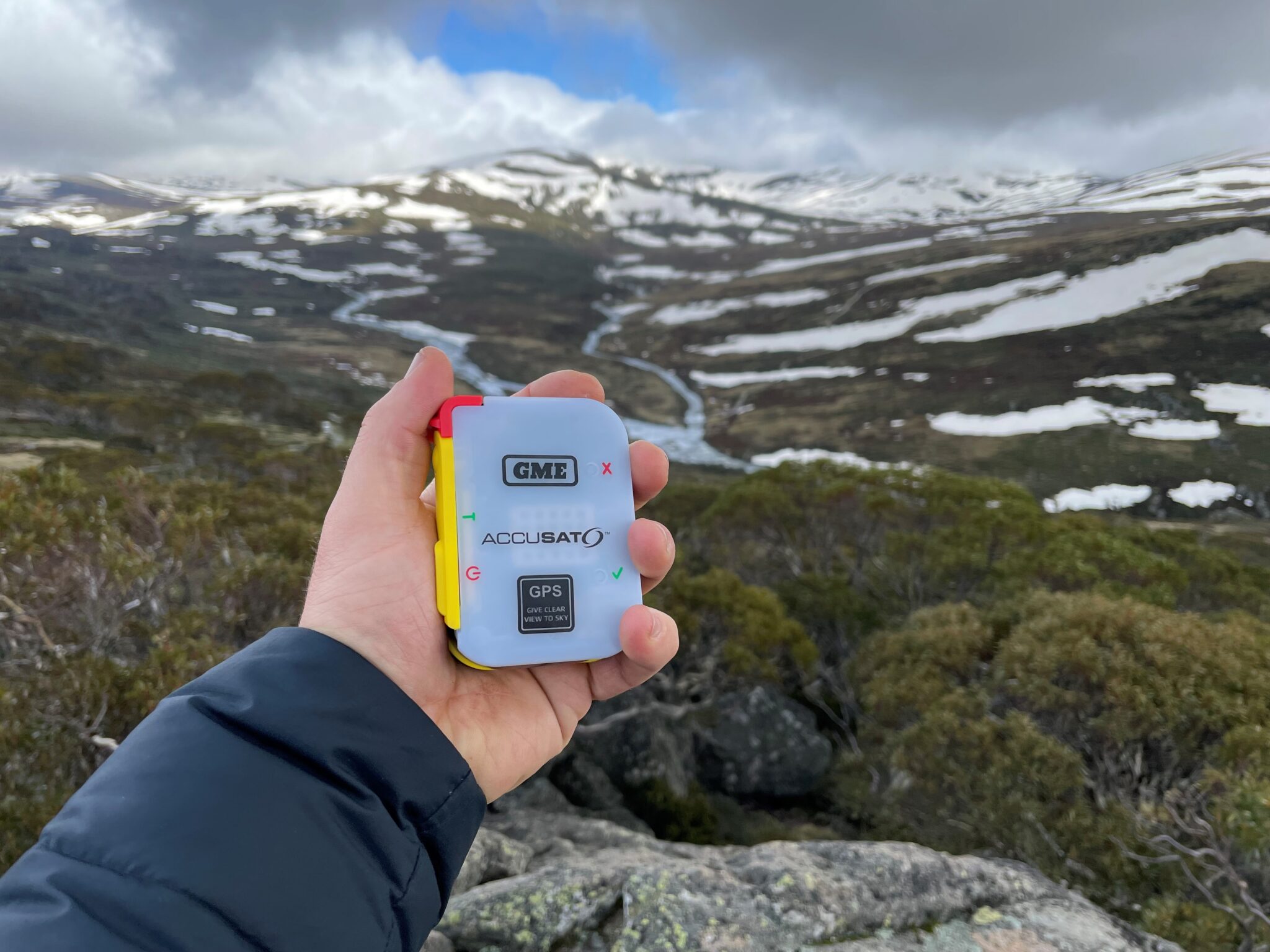
If possible, move to an open area with a clear view of the sky, ideally somewhere a helicopter could land. If you have a PLB, activate it and place it upright in an unobstructed position. PLBs work poorly under dense trees and in narrow gorges. It can take several hours for a satellite to pass overhead, after which the PLB’s signal is relayed to the Australian Rescue Coordination Centre (RCC) in Canberra.
Australian PLBs are registered, allowing the RCC to contact the owner’s emergency contacts and check whether the activation is genuine. Once confirmed, the RCC alerts the relevant state police search-and-rescue authorities, who coordinate the response. Weather permitting, helicopters are often used for remote rescues.
Another option is a mobile phone, or more reliably, a satellite phone, to call 000. Tell the operator you are in a remote location and provide your location, preferably as a grid reference, the nature of the emergency and the number of people requiring assistance.
The advantage of a phone call is that rescue operations can begin much sooner, with rescuers knowing exactly where you are and what resources are required.
Once help is on its way, your job isn’t over. When you hear a helicopter, spread out, wave and move around to make yourself visible. If it begins circling, the crew has probably spotted you. Move at least 50m from the landing area, take shelter and turn your back to the helicopter.
Helicopter rotor wash can be extremely powerful, sending loose equipment flying and breaking branches. Never shelter beneath large limbs. Once the helicopter lands, do not approach it. Wait for the medic to come to you and follow their instructions.
If a winch rescue is required, stay well clear of the winching area and follow directions from the crew.
What does a rescue cost?
Emergency helicopter rescue services in Australia are generally provided free of charge when there is a genuine emergency. However, ambulance transport to hospital is not necessarily free and can cost $1,000 or more. Ambulance cover or appropriate insurance is therefore highly recommended.